Early Michigan History
Before contact with Europeans, what is today known as Michigan was inhabited by a variety of Algonquian-speaking people groups, including the Fox, Miami, Ojibwe, Huron, Ottawa, and Kickapoo, among other tribes. In total, it is estimated that more than 100,000 indigenous peoples called the Great Lakes region home, including approximately 15,000 living within Michigan.
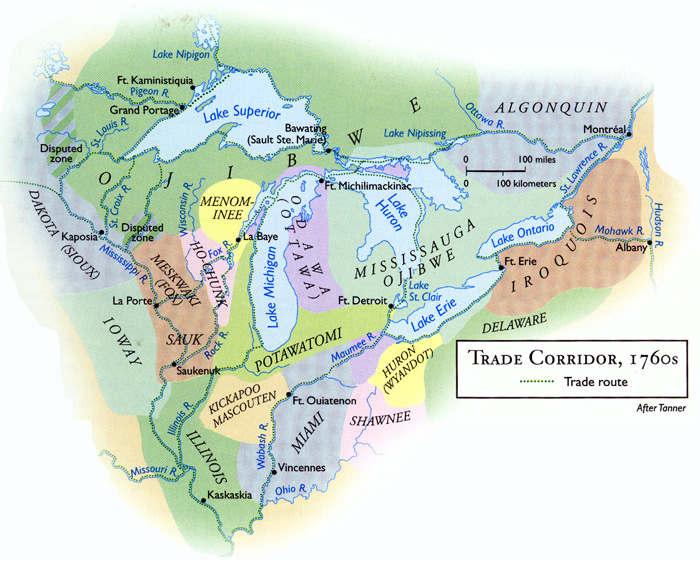
The word “Michigan” itself comes from an Algonquian word meaning “big lake”.
Today, 12 federally-recognized tribes continue to call Michigan home, including the Lac Vieux Desert Band of Lake Superior Chippewa Indians, the Little River Band of Ottawa Indians, and the Little Traverse Bay Bands of Odawa Indians.
It is unknown exactly who the first European was to set foot in what would one day be known as Michigan, but there is little doubt to where that person came from – France.
Samuel de Champlain, noted French explorer and founder of the city of Quebec, is thought to have reached the Great Lakes region by 1612. Champlain sent a young man, named Etienne Brulé, west in search of the fabled Northwest Passage. It is believed that Brulé reached the Sault Ste. Marie area by 1618. He then returned to what would become Michigan in 1621, heading west as far as the Keweenaw Peninsula, collecting samples of copper.

Samuel de Champlain is thought to have made an enemy of the Iroquois Confederacy early on by assisting their rivals, the Hurons. Thus, Iroquios controlled areas, now New York and Pennsylvania, became largely closed off to the French. Therefore – French soldiers, traders, missionaries, and explorers tended to keep north. As a result, many of the earliest European settlements in the area were on the Upper Peninsula.
The French period was characterized by stories of coureurs de bois (unlicensed fur traders). Unlike the soldiers and the missionaries that sought to establish forts, these men set out to hunt for furs in the frontier, and often lived among Native American groups. Though perhaps exaggerated, these voyagers often respected Native American customs and even took Native American wives instead of returning home to France.
The Founding of Detroit and Imperial Competition
Michigan, like many other parts of North America during the late-1600’s and early 1700’s, was a venue for imperial rivalry to play out between the British and the French. In 1694, commandant Antoine de la Mothe Cadillac, requested permission to construct a defensive fort at place du detroit along the Detroit River. Granted permission in 1701, Fort Pontchartrain was established on the site that would one day become the City of Detroit.
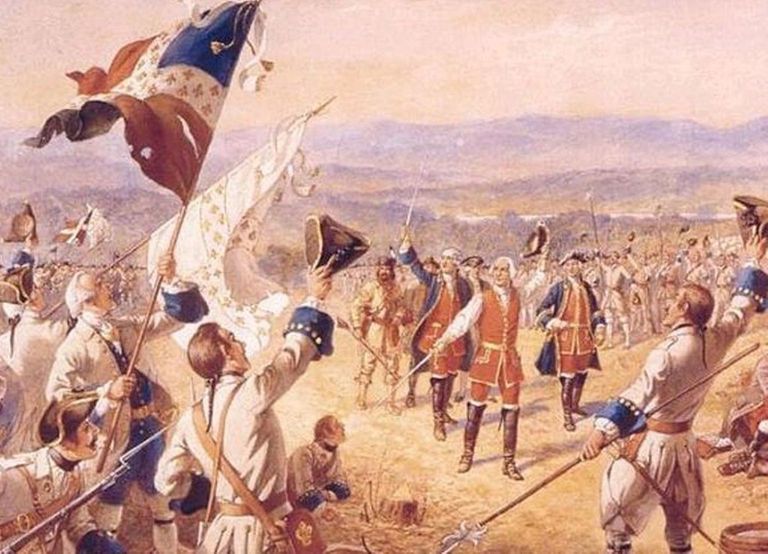
The French Period of Michigan history would come to an end after the French and Indian War in 1759. In 1760, the French formally ceded Detroit to the British.
The British Period of Michigan history would provide a sharp contrast to that of the French. As with the French, the primary interest of the British was the exploitation of the fur trade. Instead of the more casual and reciprocal approach taken by the French coureurs de bois, the British operated through military alliances and overwhelmingly, violence.
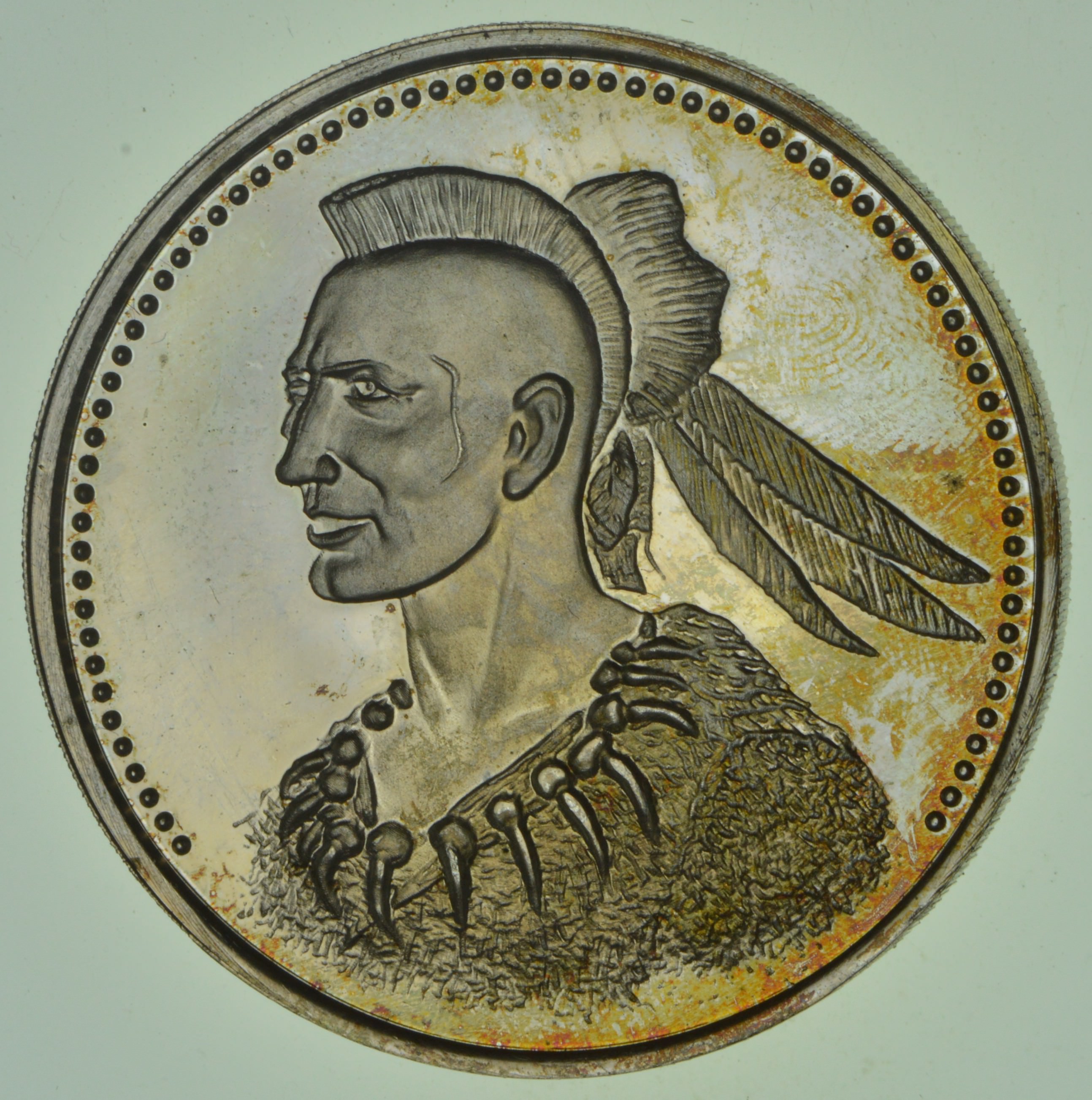
In 1763 – in reaction to the conduct of the British military, troubled by increasing encroachment by settlers in the region, and encouraged by the French settlers that had remained, an Ottawa leader named Pontiac launched a rebellion.
The carefully planned and executed rebellion was a major success and several British forts fell, while Fort Detroit would experience a prolonged siege.
Three years of hostilities – that left as many as 400 British soldiers and 2,000 settlers killed or captured, and forced as many as 4,000 settlers from their homes – concluded on July 25, 1766, when the British decided to negotiate and sign a peace treaty with Pontiac.
This peace treaty, which recognized native ownership of land, still influences Canada’s policies toward its First Nations people today.
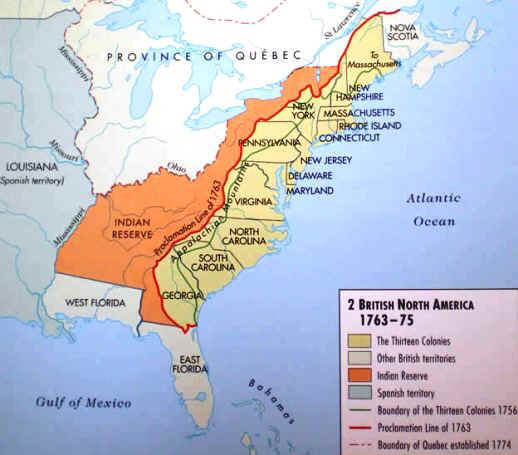
The rebellion, as well as several other incidents in the 1760’s, worried the British that further violence would harm the lucrative fur trade. The rebellion was part of the motivation for the Royal Proclamation of 1763, which separated the thirteen colonies in the East, and barred settlers from crossing the Appalachian Mountains.
This Proclamation is often cited as one of the tensions between the Thirteen Colonies and the Crown that led to the outbreak of the American Revolution.
American Michigan
The American Revolution, fought between the Thirteen Colonies to the east and the British Empire, had little immediate impact on Michigan. The region had little in terms of population, and remained firmly in the hands of the British throughout the conflict.
However, the 1783 Treaty of Paris, which officially ended the war and granted independence to the American Colonies, included Michigan in the geographic area ceded to the United States. It would be several years before the fledgling American state was able to assert governing control over Michigan. It fell to the British during the War of 1812, but the American story of Detroit had begun.
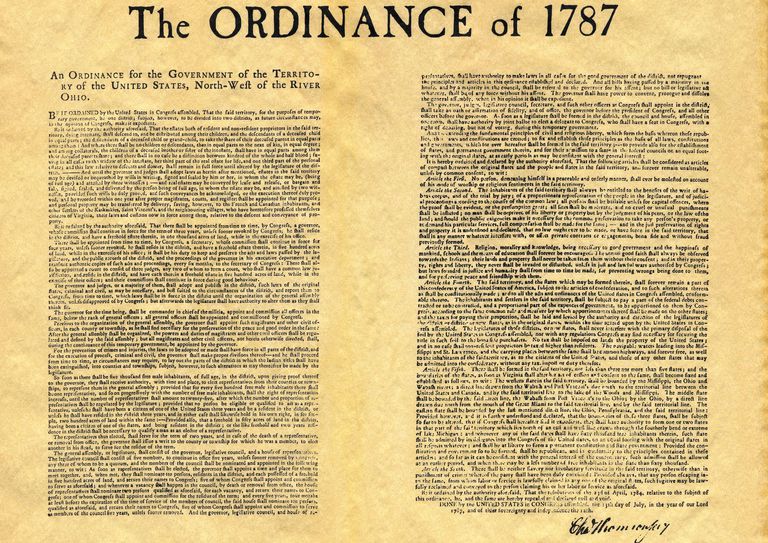
In 1787, under the Northwest Ordinance, what would become Michigan was organized into a territory along with much of Wisconsin and portions of Ohio and Indiana. On October 13th, 1804, a gathering in Detroit called for and signed a petition to create a separate territory of Michigan, with more than 300 signatures. On January 11th, 1805, Thomas Jefferson signed legislation that created the Michigan Territory.
Detroit was the most populous area of the new territory, but even calling it a settlement at that time might be stretch. Decades of conflict, and a recent massive fire, had left Detroit as little more than a dot marked on a map. With the granting of territorial status, with Detroit as its capital, one of the first acts of the new government was to arrange for the rebirth of the town.
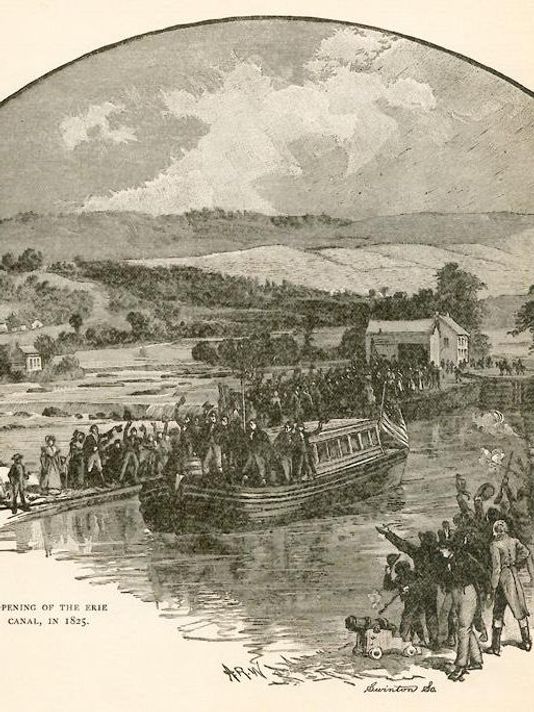
Detroit was little more than a frontier town, specializing in preparing furs for transportation elsewhere, but that was all about to change. On October 26th, 1825, the Erie Canal was completed and opened. The canal connected Albany at the point where it sits on the Hudson River – to Buffalo, at the point where it sits on Lake Erie. No longer blockaded by the colossal Niagara Falls, the Erie Canal linked Great Lakes shipping to the Atlantic Ocean.
For Michigan, and Detroit, a modern age was born.
Michigan as a State
By the turn of the 1830’s – “Michigan Fever” – was on. In 1820, Michigan had approximately 9,000 residents. By 1830, that number reached 32,000 – 3.5 times the population of a decade before. By 1840, there were 212,000 people calling Michigan home, 9,100 of them living in Detroit. By 1850, Detroit had 21,000 residents. On the eve of the Civil War in 1861, it doubled to over 40,000 residents, placing it as the 9th largest city in the United States.
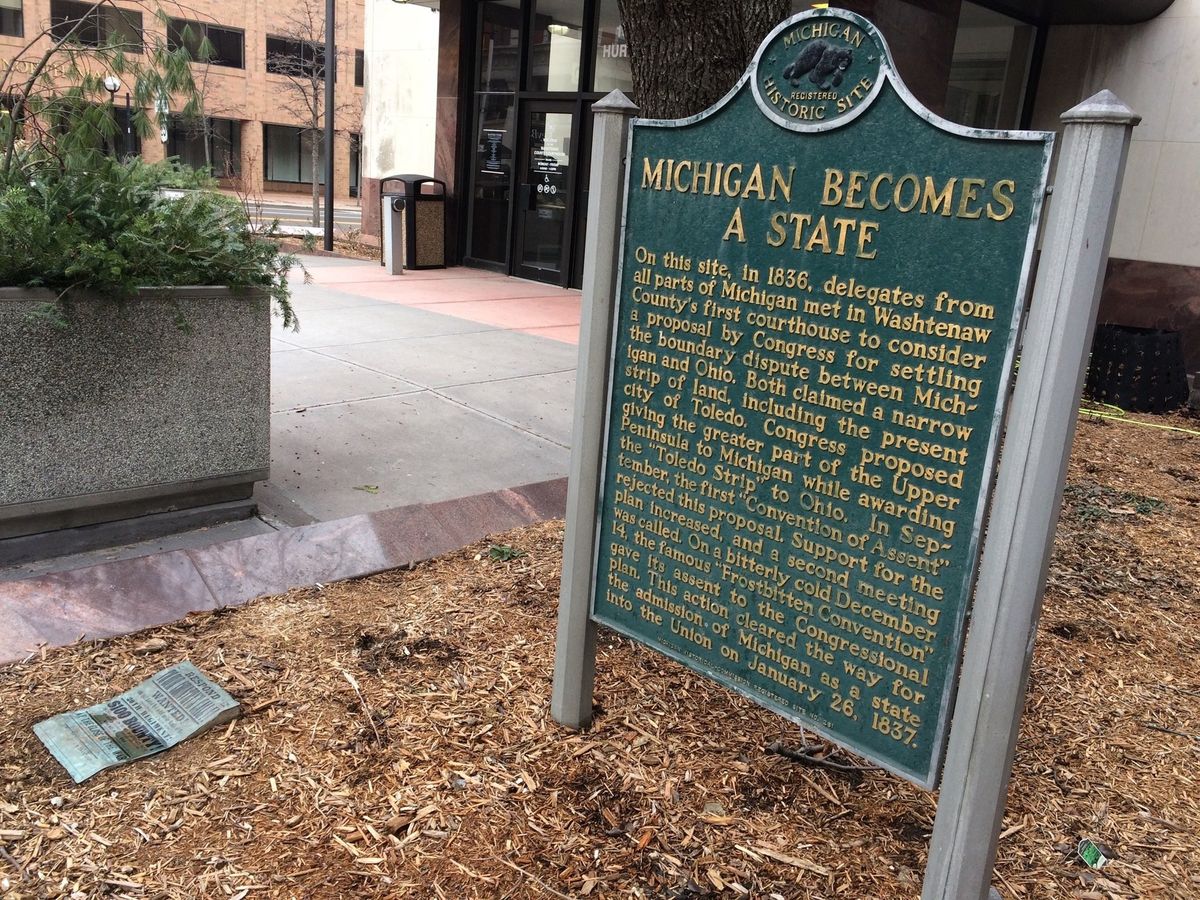
In 1833, Michigan possessed the necessary 60,000 residents necessary to draft a Constitution and apply for statehood, as stipulated by the Northwest Ordinance of 1787. In 1865, a State Constitution was passed by voters. Approval was delayed over a dispute with Ohio, over the 468-square mile sized ‘Toledo Strip’, a strange incident during which territorial militias of two states armed against one another.
Nonetheless, a compromise was reached – Ohio received Toledo, and Michigan received 4/5ths of the Upper Peninsula. At the “Frostbitten Convention” of 1836, the delegates from the two states accepted the agreement – Michigan’s statehood bid was expedited, and on January 26th, 1837, Michigan became the 26th state.
The state’s constitution, written in 1835, stipulated that Detroit would serve as the state capital until 1847, when another site would be chosen. In 1847, the undeveloped Lansing Township became the state capital and seat of government.
Detroit and the American Civil War
In 1773, Detroit counted 96 slaves among its population. By 1778, there were 127 slaves, and by 1782, there were 179 slaves. By 1830, in the years leading up to statehood, only 30 slaves were reported in census date. When Michigan became a state in 1837, all these slaves either died or had been freed.
Although slavery did not become an entrenched institution in Michigan the way that it had in the American South, the story of race in Michigan is complicated.
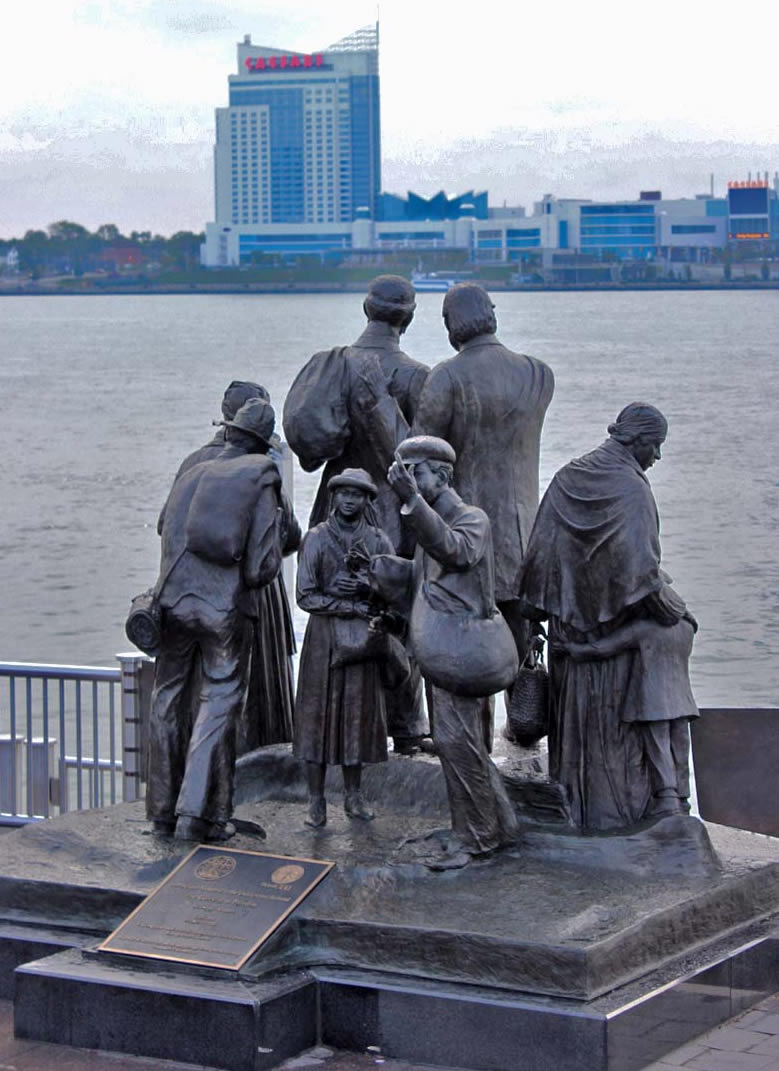
In some cases, Michigan was central to the abolitionist movement, and hosted many large societies that sought to end the institution. Michigan’s proximity to Canada made it a critical component of the Underground Railroad – and key figures such as Sojourner Truth operated within its borders with the assistance of Michigan citizens.
Henry Clay, Southern slave-owner and politician (albeit a conflicted one), decried Michigan as “a hotbed of radicals and renegades”- as he pushed for the Fugitive Slave Act of 1850.
Detroit was home to a few secret societies, mostly made up of free blacks, determined to prepare for and participate in the fight to end slavery, when it came. The names of these societies included the African-American Mysteries, the Order of the Men of Oppression, the Committee of Vigilance, or the Order of Emigration.
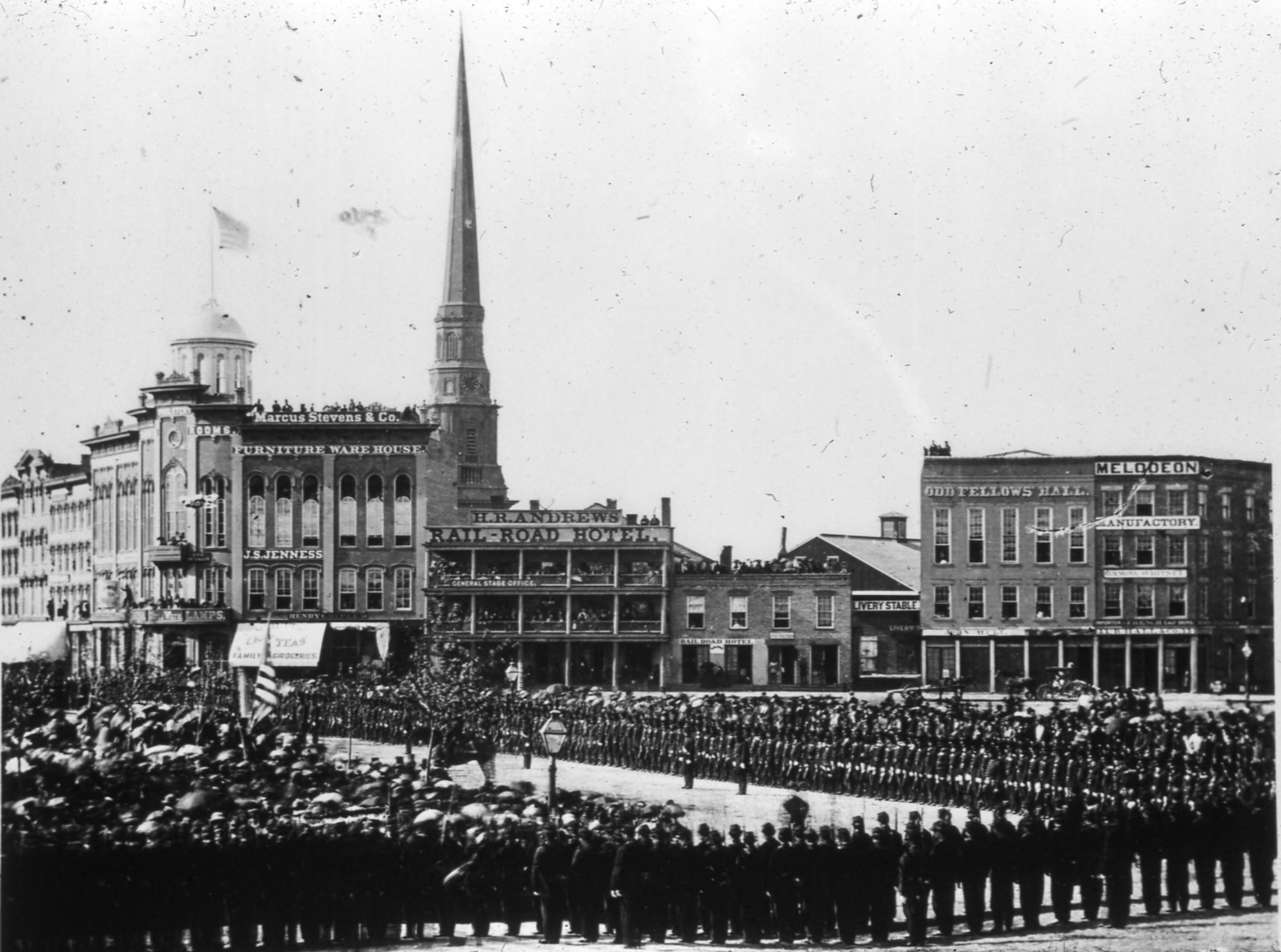
Michigan and Detroit supplied large amounts of manpower and resources to the Union Army once the Civil War began. Michigan supplied 65 regiments to the war effort, including an all-black 102nd Colored Regiment, created after the Emancipation Proclamation in 1863.
However, as in other regions of the North, prejudice against Blacks and scapegoating for the suffering inflicted by the war led to racially charged panic, fear, discrimination, and mob violence. Racial divisions were in Detroit to stay.
Panic of 1837
Detroit’s first chance to grapple with the effects of a fluctuating global economy came during the nascent period of Michigan’s existence as a state, when the United States was hit by the Panic of 1837.
The Panic of 1837 originated in the United States from President Andrew Jackson’s economic policies. Jackson had an adversarial relationship with bankers, a hatred and mistrust of paper currency, and a belief that the Central Bank of the United States was a corrupt and unconstitutional institution.
Jackson issued an executive order, ‘Specie Circular’, which forbade the purchase of government lands with any currency other than gold and silver. This rapidly devalued paper currency, leading to rampant inflation. Jackson then crippled the Central Bank with the Deposit and Distribution Act of 1836 – which withdrew federal funds from the Central Bank and placed them in state level banks, known as “pet banks”.
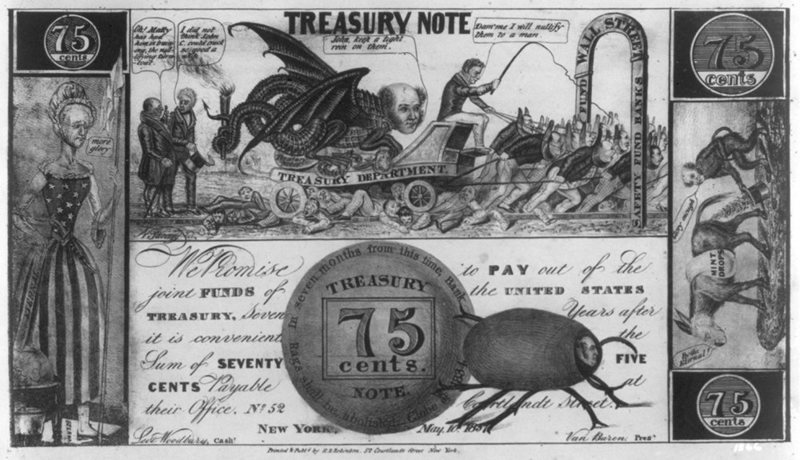
As a result – almost anyone, anywhere (including in Michigan) – was encouraged to open a bank, and many of these banks operated with relaxed lending practices.
On the other hand, established banks and other financial institutions on the East Coast witnessed their cash reserves dwindle, and thus had to restrict their lending practices significantly.
Land prices collapsed, right after a period of wild speculation, and most purchasers were then unable to make payments. To make matters worse, European creditors rose interest rates, attempting to recall funds from the United States. Bank runs, bankruptcies, an unemployment rate as high as 10%, and the lack of available currency across the nation led to an economic depression that lasted until the mid-1840’s.
Michigan and Detroit especially suffered, as just before the Panic of 1837 set in, the state had just borrowed $5 million to fund state infrastructure and improvement projects. These projects included railway construction, a network of roads, and a system of canals, many of which would never be finished.
Emerging Michigan Economy
Before Michigan and Detroit became marvels of the dawning manufacturing age – the economy was dominated by the surrounding natural resources. In the Colonial Era and the Early-Republican Era it was the trade of furs. During most of the nineteenth-century, it would be the mineral deposits primarily located in the Upper Peninsula, the lumber industry, and the agricultural sector that would bring Michigan its incomes.

Between 1850 and 1900, the population of Michigan increased by a factor of 600%, growing from approximately 400,000 to 2.4 million people.
As the fortunes to be made in the resource extraction of the Upper Peninsula decreased and the lumber industry dwindled, the state began to urbanize, and by 1900 – 40% of Michigan’s residents lived in urban areas – 285,700 or so living in Detroit.
Sources Consulted can be viewed here, and are arranged by section.
Images are not cited in bibliography, if I used an image that is yours and you would like me to take it down, please contact me here.
All content on this page is the original writing of Robert Brehm, based on his research findings. If you would like to use anything above, please cite this page. Thank you!
 Detroit in the International System, 1898 to Present